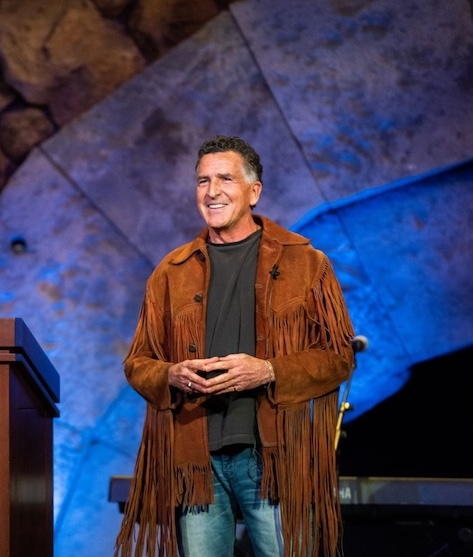
Edgy Interview: Steve Alexander
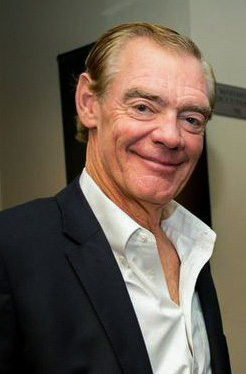
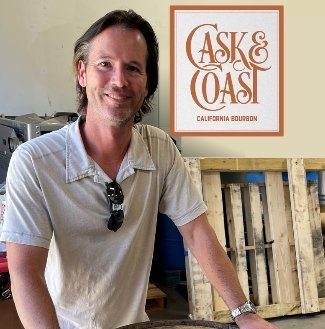
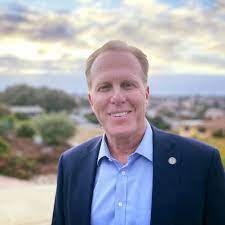
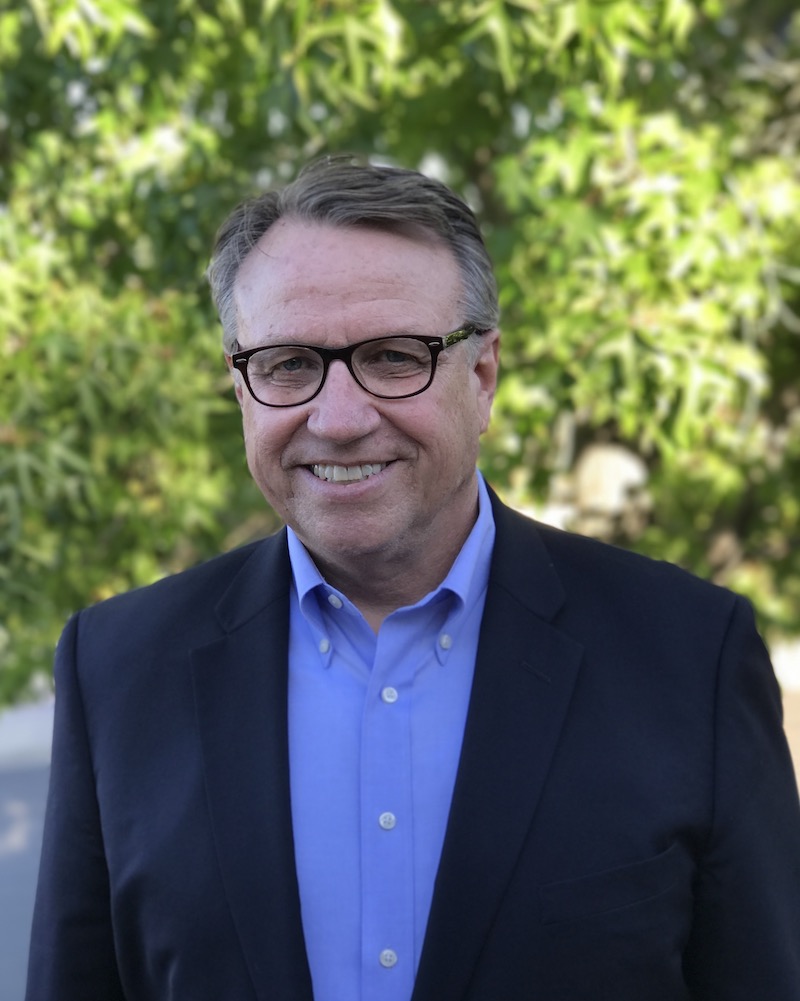
Folks, prepare yourselves. Steve Alexander has a lot to say and a lot of cool stuff going on. He is an executive leadership coach, filmmaker, author, and longtime public affairs advisor whose career spans more than five decades at the intersection of politics, communication, and personal transformation. A former licensed marriage and family therapist and public relations executive, he has coached CEOs, elected officials, nonprofit leaders, healthcare executives, and community organizations throughout California and beyond.
Steve takes a values-based approach to leadership, emphasizing humility, service, self-awareness, and what he calls “leading from the heart.” His professional journey has included appointments to numerous public boards and commissions, leadership roles in state government, and extensive work in executive coaching and strategic communications.
In recent years, Steve, along with his wife, has expanded into independent filmmaking as co-founder of AHA! Productions, backing projects that explore themes of resilience, identity, purpose, and human connection. Whether coaching leaders, producing films, or speaking about social change, Alexander brings a perspective shaped by an admirable commitment to personal growth, public service, and the belief that meaningful leadership begins with listening.
Get ready for a mind-expanding Edgy Interview.
When you were a child, what did you want to be when you grew up?
That’s assuming I have grown up!
When I was around nine or ten, my baseball team was interviewed on a local AM radio station, and we were asked by the announcer what we wanted to be when we grew up. I heard the typical responses from my teammates, ones you would expect to hear in the late 50s – policeman, fireman, things their dads did and so on. When he got to me, I blurted out, “Atomic Research Scientist!”
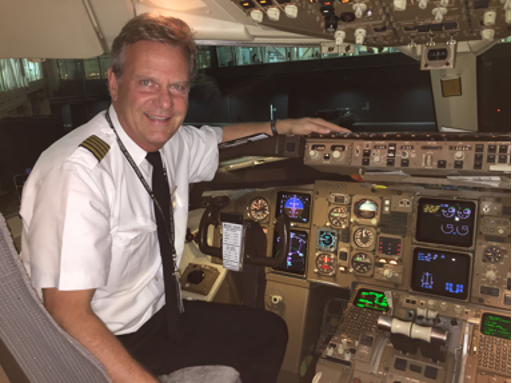
I really had no clue what that job was and only it seemed like a path: I did know I wanted to be what we now call an Astronaut (no such ‘job description’ existed at the time). I always had a passion for space, “outer space,” as we used to call it, the big unknown up there. I have since flown airplanes, ultralights, jumped out of an airplane a couple dozen times (with a parachute, of course), and continue to seek fulfillment of my fascination with anything that happens in the air.
I still mark my calendar for the special night sky events like we’re having this month in June 2026 and look forward to the Strawberry Full Moon on my birthday on the 29th. My life dream is to make it to Houston for the NASA tour and the Kennedy Space Center in Florida at Cape Canaveral. A close friend here has a turboprop plane and I’m working on convincing him we should fly there from San Diego. That’s the closest I will get to that dream… unless someone you know is offering a ride on the Virgin Galactic trip.
Looking back, what did Woodstock (the 1969 Woodstock Music & Art Fair, the largest musical event in history, which took place near – not at – Woodstock, New York) teach you about culture, change, and human behavior?
I attended the festival when I was eighteen. College-bound to become a stockbroker. On a full, four-year scholarship with the ROTC (Reserve Officers’ Training Corps). I returned from the event where almost a million people, depending on your count, got along for three days. And by ‘got along,’ I mean no fights, no theft, no violent crime of any sort. Without substantial food and water and shelter.
How did that happen? Especially at a time when our country was in complete turmoil – civil rights issues, a war in Vietnam that was losing popular support, cities in flames and a president who later resigned in disgrace for the corruption of his campaign operatives.
It left me perplexed so much that when I returned to attend my first couple weeks of college and a career in the stock market, I decided to leave and discover who I was in the context of our struggling world.
The event was a contrast of the values and culture that most of us grew up with in the 50s. If you were white and a male, you didn’t really notice so much the inequities of that world in which you lived. And yet, women could not get credit without their husbands, people of color were openly and violently discriminated against, and justice was a system that was not blind based on the statistics about who populated our prisons, many innocent of anything other than being non-white and victims of our country’s history and prejudice.
My worldview was turned upside down at Woodstock. Such a peaceful event. The irony for me personally was that my best friend, who attended Woodstock with me, turned out to be the pall bearer in the funeral of the only person who died innocently at the event, run over in his sleep by a helpful tractor driver pulling out vehicles stuck in all the mud. Life was confusing and I had more questions than answers, which prompted me to journey to the South to learn more about race and prejudice. My studies turned to different topics, like African American history and psychology and education, and my trajectory changed significantly.
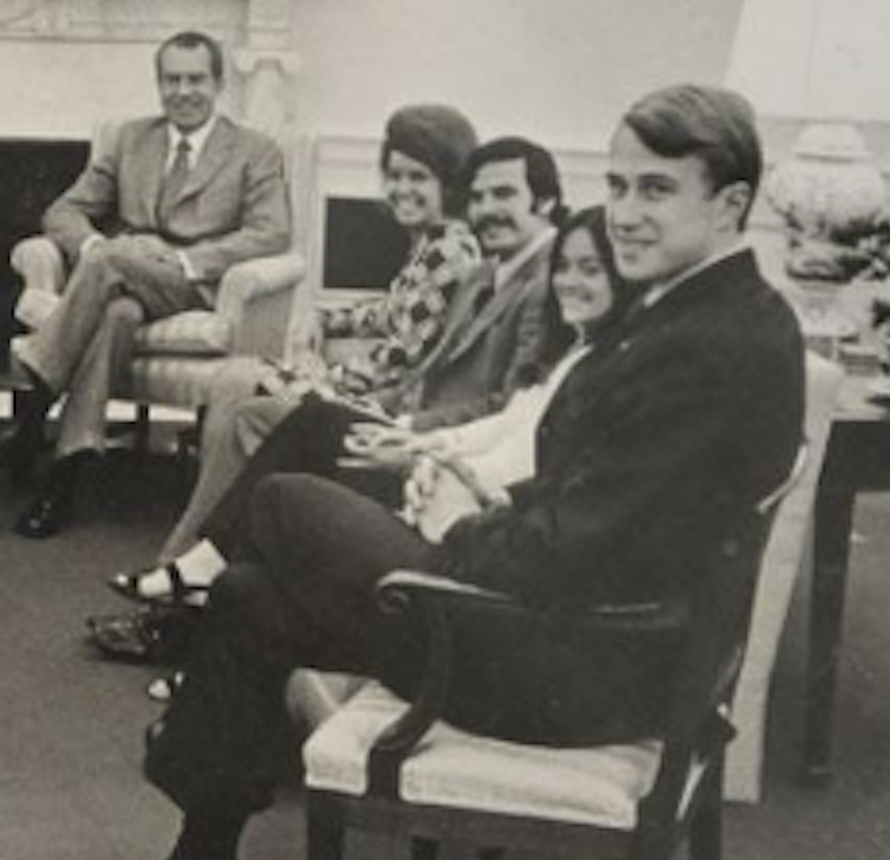
Fifty years later I was asked to give the keynote speech for the 50th anniversary of Woodstock on the site of the original festival in Bethel Woods, New York. And later was asked to serve as a trustee on the Museum at the Bethel Woods Center for the Arts, Home of the 1969 Woodstock Music & Art Fair, where I do what I can to give back to that place that gave so much to me.
It was humbling to return to that place where I experienced a part of America, then called the counterculture, that had, decades later, become my culture, my values, and a way of life to which I am deeply committed today. To seek first to serve, rather than be served. To find ways to give and love, rather than take. And to encourage others, coaching clients and whomever I have the privilege to engage with, to find ways to lead from the heart, to uncover ways within ourselves to forgive when harmed, and to create a world where, as the Mahatma Ghandi said, we need to be the change we want to see in others and in the world.
Who should play you in your biopic?
Well, that’s a big assumption there would ever be one! I have always loved Robert Redford’s style, passion, talent, and how he shows up on the screen. And not because he was so damn handsome. His theatrical voice touched my heart from his first film to his last.
I would love to see him play my early years growing up poor in New Jersey, although admitted to college, leaving a full college scholarship behind and walking out the door of the university after attending the Woodstock Music & Art Fair in the summer of ’69; my travels through the South getting a first-hand exposure to racism and prejudice as a long-haired hippie of the lates 60s and early 70s; and the circuitous path I traveled to find my way spiritually over seven decades of planet-walking.
If only… well, it is a fun question, right?
What book – fiction or non-fiction – influenced you most?
The toughest question of your interview so far! I am an avid reader. I re-read books now that I read in the 60s and 70s. Each morning, I start my day with an hour Reflection Time and have been reading Anthony DeMello’s “The Way to Love” for more than 40 years. I also read Mark Nepo’s daily book, “The Book of Awakening,” one of Oprah Winfrey’s big deal books. I have met Mark at a couple retreats, and as a two-time cancer survivor, his books – all of them – have a perspective that should be read by anyone.
I just re-read “The Source,” by James Michener, one of my favorite authors, and his influential (to me) “The Drifters,” which I read in undergrad, about a group of young folks like me then who toured Europe in a VW bus (yes, I traveled across the US in own of those, too, and it brough me to San Diego for my graduate program… and the rest of my life.). I also re-read some of his other stuff. Timeless.
I am a big fan of Hemingway, and just re-read, “For Whom the Bells Tolls,” and also re-read Nikos Kazantzakis’ “Saint Francis,” who is one of my hero-type humans. After reading the book and studying the life of St. Francis, my life dream was to visit Assisi in Italy, which I did, and left behind a memento of something gifted to me by a Buddhist monk I met in Vietnam. [ed. With its light cream stone and focus on Francis, Assisi is a special place]
Daily reads today include things like “Aging Successfully,” “The Okinawa Program,” and a number of others about living a long and vibrant health span as well as life span. Coming up on seventy-five this month, it seems like the right stuff to be reading to help shape however much longer I’m sticking around.
I read Sir Anthony Hopkins’ autobiography as well, given our role with the project, “The Species,” and whether you are into film or not, it’s an amazing read with an enticing title, “We Did Okay, Kid.” Tender, insightful, engaging, and worth every page of discovery about this well-known actor with a little-known past.
I also just finished, “The Last Kings of Hollywood,” about three young upstarts who tried so hard to make it in the old studio-driven Hollywood of their age when they were fresh out of college. It lent a great perspective on this crazy industry and how unpredictable it can be. And once again, it helped me to not take myself so seriously so I can continue to enjoy this late-in-life adventure of filmmaking.
Oh, those three young upstarts? Francis Ford Coppola, George Lucas, and Stephen Spielberg. They did pretty good.
This could turn into a ‘Top Ten’ book list pretty fast. Prince of Tides, She’s Come Undone, Exodus… the list goes on and on.
I love the line from my favorite film, albeit, in retrospect it has some unfortunate stereotypes, “Out of Africa,” with two of my favorite actors, Meryl Streep and Robert Redford. When he sees the large volume of books she has, he asks about them to which she replies, “I am a traveler of the mind.” I love that books take us places, both geographically, emotionally, intellectually, and spiritually, that we might not go on our own.
What do you make of the state of politics in America these days?
We are broken…but not in ways unlike we have been before in our country’s history. The violent founding of the country itself occurred through the overthrow of an oppressive regime. The Civil War. Suffrage. The civil rights movement. Vietnam and the anti-war movement. All examples of how we break. Heal. Rebuild. And re-create.
I love what my friend, author and poet, Mark Nepo, says about this, that… when we break, we break loudly, like a vase shattering from a fall into many pieces. Yet, when we heal and come together, it is often with patience, silence and calm.
This is the nature of any organism. It seeks homeostasis – the need to be in a static, safe environment. Yet nothing is static and the world changes and our country reflects those changes. It always has just like any organism. We cannot stand still and so we stretch. And sometimes that is – or can be – extremely uncomfortable. Like Neale Donald Walsch says, “We begin to grow when we reach the edge of our comfort zone.” That’s where we are now.
I lived through the sixties. It was a tumultuous time. People were protesting in the streets of our United States, and no one could find the path forward. People died. My ‘bothers and sisters’ who went to the Vietnam war, struggled in the civil rights efforts and sought what they – we – though was best for this country.
It’s no different today. Except for a couple of important changes. We can see it all unfold before us. Every day. Every social media post. Every part of the 24-hour news cycle. That was not true in the 60s and 70s when the three networks (CBS, NBC and ABC) provided our evening news, twice, at 6:00 and 11:00 p.m. They were prohibited from showing caskets of the soldiers returning from Vietnam. We mostly only learned what was told to us and usually with some delay. Can you imagine that restriction today?
So, it all unfolds in front of us now, in our hands, heads and hearts. And we cannot get away from it and are absorbed by it. Seduced by it. As a result, we wring our hands more vigorously. We get addicted to the latest negative ‘news,’ whether it is reported by a reliable source or created by someone’s AI feed.
And so we become like what we see. The world is a mirror. And just like a mirror, we see what we look at. Unfiltered. It becomes our reality. And for many, it is not a pretty image.
So, I have liberal friends who, of course, are deeply disturbed by what’s happening with the current Administration. They become filled with frustration, anger, bitterness, hatred. All the very things I know they cannot countenance in what they are seeing.
It is a very seductive time to become part of that. To hate what we hate.
We are challenged, as we have been in the past, to do more, to be more, to be better. As Maya Angelou says, “Know better, do better.”
We’ll get through this as we have all our past woes, challenges and fractured times. Wars that killed thousands. Civil wars as well as wars that stretched our credibility in the world, like Vietnam.
And we’ll be better for it. We need only find the path that allows us to see, understand and accept the differences in others. To conjure up the compassion to understand the often torture of their own souls. To see differences as bridges to cross rather than walls to put up.
Love where we can find it in our hearts to do so. It has happened before. It can happen again. And we will be stronger for it. As individuals. As communities. As a nation. As a world.
The alternative is unacceptable.
You’ve coached a lot of elected officials and politicians. Which one has been your favorite and why?
A good executive leadership coach, as the saying goes, ‘never kisses and tells.’ I thought this was a helpful question for other reasons because it really is about leadership. This is true for the CEOs I coach. And leaders in law enforcement, healthcare, public and private industry, non-profit organizations, etc. The best leaders – and we’ve had a number of them in San Diego – lead from the heart. They are clear about their ‘True North.’ They know how to inspire and motivate others by who they are, how compassionately they care for others besides themselves and their own interests.
I read “The Way to Love” each day. DeMello is an India-born Hindu who became a Jesuit priest. I prescribe it to all my coaching clients. He talks about the vanity of leadership and the test of when we know someone has moved beyond that. The folks I have enjoyed working with over the years have had that essence of public service, truly, being of service to the public. As was intended when our country was founded when folks did not ‘run’ for office; it was bestowed upon them, and some with great reluctance for concern they could not measure up to the job and serve the country and the people well.
There are a number with whom I’ve been humbled to work and be a part of their journey over the years. It’s safer for me to name a couple of those who have served and transitioned. People like Lucy Killea, whom I met when she was on the San Diego City Council, and seeking a position in the state Assembly, which she attained and went on to the state Senate. Truly humble, compassionate in her beliefs and mindful of the small role she played in making her influence useful to the communities she served.
Mike Gotch was another. Died too young of a brain tumor. He loved his work on the San Diego City Council and later in Sacramento. His eyes twinkled with the energy to do good for the bigger world in which he lived. Gone too soon, and like Lucy, was a model of public service and a privilege to be his close advisor on his personal and professional journey. I was humbled to write his epitaph on the monument at the bridge that completed the circumnavigation of Mission Bay, where I, as his appointee, served as its chair.
I have also coached teams, and it is easier to name one of them as a group in order to protect the innocent. One such team is with The Nature Conservancy. Our work together represented the best in them and the best in me. That is a critical ingredient in the coaching relationship. To their credit, through the work they initiated and we did together, that team raised over $150 billion in conservation funds to protect our land, water and the quality of life we love throughout this country for generations to come. Their humility, individually and collectively, is a strong characteristic of the best leaders and teams.
We need more leaders like this today on every level of government service.
What’s the best piece of advice (other than not to run) you’d give a candidate these days?
You must have heard me say, “Don’t run!” in my trainings before! Seriously, it is a tough job for anyone in the public these days. We have people and communities more connected through social media than every before and yet we are more disconnected from one another than ever. Just go to any local restaurant and do a visual survey. Watch how many are on their devices, even at the same table at the same time. Disconnection that leads to what I talked about in the other question. Everyone can be critical from the sidelines these days, and it takes a well-grounded soul to handle it.
To lead these days is tough. The advice I received was from Donald K. BrOwn (that’s not a typo; that’s how he spelled his name and how he was known in the state Capitol!), perhaps the state’s biggest lobbyist at the time I spent my years in the Capitol in the 70s as a twenty-something know-it-all leader/CEO of a statewide organization, the California Association of Marriage and Family Therapists. He pulled me aside one day when we were about to see historic legislation pass that would benefit the lives of countless people by broadening the accessibility they would have to therapists of their choice under California insurance law.
And was I ever full of myself for leading the effort!
He was a formidable guy representing most of the biggest entities doing business in California. His words, “The work we do in the Capitol is especially important. It affects the lives of countless people every day. Policies that have great economic and social impact. It is serious work and you should take it seriously. But don’t ever do the same with yourself. Once you’ve taken yourself seriously, you’ll forget how to be humble, how to keep yourself in perspective. One person. That’s all. Do not fall victim to your own ego.”
That was the late 70s. I have never forgotten his look, his manner and his words. And I have done my best to live that and encourage the elected officials and other leaders with whom I have been humbled and privileged to work, to do the same.
Sadly, that’s not always the case, and, like any drug, once ‘self-importance’ is in the veins, it is extremely hard to experience the clarity of Don BrOwn’s wisdom and words. Sometimes elected officials — more so politicians — begin to believe their own press clips, even though many are self-generated.
What do leaders most often misunderstand about communication?
I have spent much of my professional career in this lane, whether as a licensed marriage and family therapist, the Regional Director of the world’s largest public relations firm, Burson-Marsteller, or as an executive leadership coach and media relations and public speaking trainer. The biggest mistake – and it is an easy one to make – is leaders ask the wrong question when they think about speaking. It’s usually the first step they take and the wrong one.
Typically, when approached to talk, the person will ask, “What am I going to say?” Then they’ll see if they have a PowerPoint deck already done to make it easier. That’s simply the wrong approach.
All communications focus on the person/people listening. So, the most important question is, “What does my audience want?” Then the business is to get to know that audience, be it one person or a thousand or more, and fill their need.
In my upcoming book, “I Don’t DO Mean to Interrupt! Seven Lesson for Improving All Your communications… Now,” I underscore this with tips for avoiding some of those critical communication mistakes, like jumping to the defense when getting feedback rather than responding with, “tell me more,” so, once again, you are focused on your audience, rather than yourself. Be curious about others, first, middle and last.
Our egos surely get the best of us and before we know it, we are no longer communicating. We are just trying to convince the other person of our view.
Another simple communications tip is to remember your number one job as a leader is to listen. A quick tip is to learn the three key steps to effective listening. Step one: listen. When you think you’ve heard what is being said, step two: listen for more… for what is not being said. When you’re sure you are done, step three: listen. When we really focus on our audience, this strains and stretches our egos to become more other-oriented. One of the great tests of how well this works? Try it with little people, the children in our lives. They love to tell you their truth, often unvarnished, and it is good practice for leaders interacting with ‘big people.’
One of my favorite quotes, which I use a lot with my coaching clients, is, “Listening is so close to loving that most people don’t know the difference.”
You have a new movie coming out. What story or theme made “Nuur” worth backing?
My first movie, “The Secret Art of Human Flight” (available on streaming services like Apple TV, Amazon Prime, Hulu, etc…. I could not avoid the pitch!) is a dramedy about the struggles of a young author who lost his wife tragically. It set him in motion on a path of self-discovery and enlightenment to find meaning and purpose in his own life, his choice to ‘fly’ off a cliff or… well, your readers will have to see the film.
That film features Oscar-nominee Paul Raci (“Sing Sing,” “Sound of Metal”), Lucy DeVito, and Maggie Grace (“Lost,” “Taken”) and it was an honor to be a part of the project. There’s a little bit of me in there as a therapist/coach, but I don’t tell people that!
“Nuur” is about the struggle of a Somali immigrant in Toronto, Canada (filmed a year before the tumult and news headlines of what happened in our own country, in Minneapolis, where one of the three major Somali immigrant populations lives, as we now know, along with Toronto and our own town, San Diego). “Nuur” is a Canadian Telefilm project. The lead character, Nuur, is torn between his mother’s wishes, an absentee father, his proud professor who believes strongly in him, and the Imam at his local mosque.
The theme is universal. How do we make significant life decisions? How do we take that first step on a path that could change our lives forever?
The lead producer on that film produced “Captain Phillips,” with Tom Hanks, and it is an honor to work with such talented people.
Like “Secret Art,” these themes of choice, struggle, passion, personal and spiritual growth, culture, and social influences in a changing world resonate with me and what I do as an executive leadership coach. The boy’s emotional struggles belong to us all, even though we may not be from the same culture, background or even the same homeland.
By the way, my first film, “Secret Art,” is a 97% Rotten Tomatoes-rated film and suggested as the top independent film of 2024 from one of the rating groups.
And I would be remiss if I did not pitch one of the next films we are working on at AHA! Productions, with my wife and actress Idylia Hachi. “The Species” has cast Sir Anthony Hopkin and Charlotte Rampling in lead roles about the love and life they shared as Hopkins portrays Charles Darwin. We start filming later this year and are excited as ever.
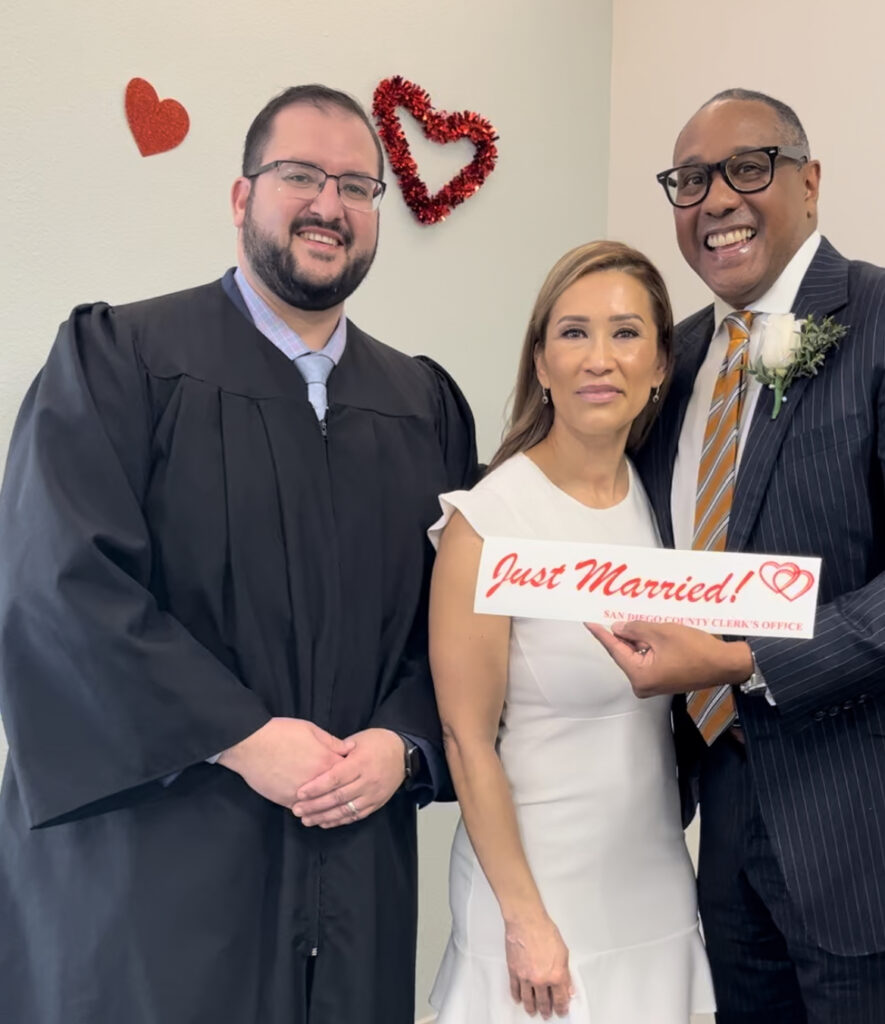
I would be equally derelict if I did not mention that my wife, Idylia, is my partner in AHA! Productions and will appear in “Nuur” as well along with Sabrina Elba.
What part of your life would surprise people who only know about your coaching and filmmaking?
I was born an introvert. I was so shy I would stay close to the lockers on the side of the halls when moving from class to class in junior high and high school, just to be hidden from view. And though I performed on stage at the time, little did others know how shy I was. If I could curl up with a good book, a roaring fire in a cabin on a lake in the woods, I’d live that way. I had to learn, after moving to San Diego and after graduate school, how to be social and to interact with others. I had to build a career and that required a lot of interaction with others.
I have played a fairly visible public role in San Diego and elsewhere for quite a while. I was appointed by three San Diego mayors as a Park and Rec Commissioner and chair of Mission Bay Park, and by three governors and served as the president of the Medical Board of California and the ‘boxing commissioner’ on the California State Athletic Board, regulating MMA, boxing and Muay Thai.
And yet, it is not my natural state of being. I spend an hour every morning in Reflection Time, reading from a dozen different and ever-changing spiritual and self-development sources. My social persona and extroverted activity are all learned behavior, as unnatural to me as speaking a foreign language.
I once thought of becoming a Trappist monk or following the Order of Saint Francis and becoming a Franciscan brother, living a monastic lifestyle. My best friend throughout college and beyond was an Augustinian priest, and I spent many nights and days living in monasteries while visiting him. It was a path. Or I envisioned the life of a writer – F. Scott Fitzgerald was another one of my long-ago heroes – sipping a glass of Scotch, smoking my pipe, and toiling away in the recesses of my writer’s abode. (I gave up drinking, other than wine, long ago, and that pipe went the way of coffee, Scotch and those imagined necessary accoutrements of a writer’s lifestyle. I do now spend my time writing in my Writer’s Den, self-created in the image of Hemingway’s place in Cuba, which I visited on a trip there.)
It turns out I like collecting exotic cars, traveling to far-flung places in the world and the love of my life – my wife – too much to have adopted that life.
So, here I am.
If you could return to a place you’ve already visited, where would you go and why?
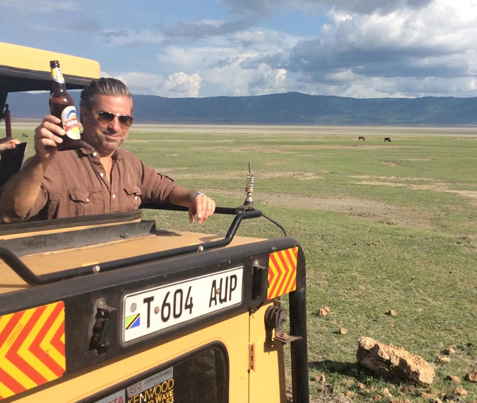
That’s an easy one: The Serengeti. I can recall like yesterday when I first stepped out of the plane and set foot on African soil in Tanzania. I wept. It was like my soul found its home.
We are all from there, you know? Africa is where our species first stood upright on two legs. (Yes, I visited the site where the Leakeys did their research in Tanzania and the home of ‘Lucy’ in Ethiopia!) And, well, we know the rest of the journey. 10,000 years to migrate up through Africa, the next major landmass through the great frozen tundra, across the Bering Strait to what we now call Alaska and Canada and then down through the Americas. You feel that in Africa, the ‘one of one’ of all the places I have traveled to in the world, Fiji, Tahiti, Bali, Costa Rica, Palau, and so on. There truly is no place like Africa.
I have since been to many of the fifty-four countries on the continent of our origins. Botswana, Rwanda, Uganda, Namibia, Egypt, Kenya, South Africa, The Seychelles, Zanzibar, Ethiopia, Zimbabwe, and more. I was ‘baptized’ in the great Zambeze River when my white-water raft overturned in a rapid on its way to Victoria Falls. And did an overnight ‘fly camp’ in the middle of the plains, falling asleep to the mewling of lions. Slept in a tree house while below, elephants tugged at the tree branches to eat the leaves from that tree while the strange-sounding, late-night cry of hippos echoed in the stillness of the night air. Once Africa gets in your soul, it is difficult to unfeel it.
One of my favorite films is about the journeys to discover the source of the Nile and John Hanning Speke, “Mountains of the Moon.” When I watched it, I was drawn to the ruggedness, the unknown, the very source of humanity.
My yearning was satisfied when I was able to travel with local friends to the source of the Nile and feel the waters of that great river at their origin. And later, sail on its calm currents in a dahabiya, the ancient sailing vessel like Cleopatra used to traverse that vast and spectacular waterway.
There is a saying in Africa I love, “Ubuntu.” It is a refrain one uses when coming out of the bush after a long trek and seeing another. When said between two people, it translates, “I see you!” And in response, “I am here!” It sums up what I love about Africa, its cultures and its naturalness. Ubuntu is a philosophy for how I approach life. We all want to be seen, to be recognized, for who we are, for just being human. Ubuntu is an acknowledgment of that.
We say you can leave Africa, but Africa never leaves you. I believe that. And will be back soon.
What was one or some of the major events of your life that contributed to who you are today?
Two come to mind, and heart, quickly. The first happened in September 1988, while I was on what I thought would be a relaxing vacation. While watching the beautiful, serene blue ocean waters off the coast of Cozumel, we noticed a brackish color and increasing tidal action unfold before us. I spent the next three days, at the request of the hotel owner, who, as he said, “…was going home to spend the last days of our lives with family,” guiding 150 hotel guests through the dangers and ravages of the world’s worst hurricane, Hurricane Gilbert. Winds howled at over 225 miles per hour, entire streets, sewers, lighting systems, buildings and the airport tarmac and control tower were destroyed. The place looked like a war zone when the hurricane finally passed the island.
It was life-changing in many ways. One, much like the Woodstock experience in 1969, I was again seeing how people can pull together during the most challenging of times. Another testament to humanity. And the value of finding calm in the midst of a storm, literally and figuratively. We broke into groups of fifteen and I positioned those groups in the ten stories of stairwells, which we figured were the strongest area of the hotel. When we knew the hurricane was already claiming lives as it swept across the Caribbean, we had folks gather their flashlights, batteries, medications, water, food and supplies to ensure their safety as much as possible, not knowing how long the hurricane would last or what damage would be done.
I came away thinking I had been given a second chance. And felt blessed and humbled to be alive.
The second was the night my father passed away in my arms, his last breath on my cheeks and his last heartbeat in my ears. He was a sweet and tender man and influenced much of who I am today. A few months later, he came back to offer me a lesson, as he said, for me, our family and the world. His spirit was as vivid and alive as I am today.
I wrote a piece called, “In the dark of night,” about what he discovered after having transitioned. It was about worry and the uselessness of that emotion during our human journey. Dad was a worrier when alive. After his death, he gave me a gift I have endeavored to practice and share with everyone I meet. Though his returning post-transition was chilling, the message he left has warmed my soul ever since and to this day has brought peace in ways immeasurable.